
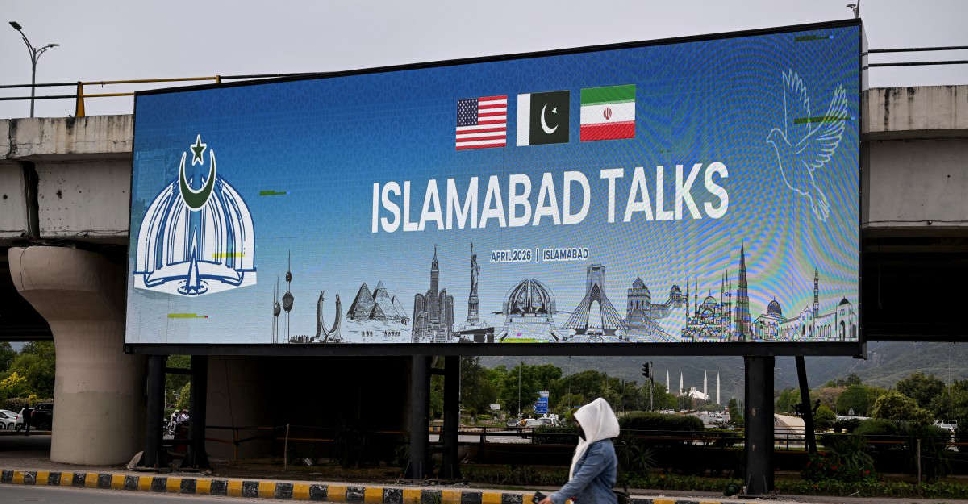
Senior US and Iranian officials met on Saturday in Islamabad for the highest-level talks between Washington and Tehran in half a century as they sought to bring an end to their six-week war.
The talks between Vice President JD Vance, special envoy Steve Witkoff and President Donald Trump's son-in-law Jared Kushner, and Iranian Parliamentary Speaker Mohammad Baqer Qalibaf and Foreign Minister Abbas Aragchi lasted for two hours before the delegations broke for a rest, according to a Pakistani source. Pakistan's army chief was also present.
As the talks began, there were conflicting accounts of what had been agreed.
A US official told Axios that several US Navy ships on Saturday had crossed the Strait of Hormuz, whose blockade by Iran has caused the biggest-ever disruption to global energy supplies. But Iranian state TV and a Pakistani source denied that any US vessel had passed through the waterway.
"We're now starting the process of clearing out the Strait of Hormuz," Trump wrote in a social media post, adding that all 28 of Iran's mine-dropping ships had been sunk.
Earlier, a senior Iranian source told Reuters the US had agreed to release frozen assets held in Qatar and other foreign banks, an assertion swiftly denied by a US official.
A SIGN OF SERIOUSNESS
The senior Iranian source welcomed the purported move as a sign of "seriousness" in the talks.
Qatar's Foreign Ministry did not immediately respond to a request for comment on the assertion about frozen assets.
The direct talks followed a morning of mediation by Pakistani Prime Minister Shehbaz Sharif as Tehran laid down its red lines that it said Washington must accept before the face-to-face talks could take place.
Among the conditions Tehran laid out to Sharif were the Strait of Hormuz, the release of Iran's blocked assets, the payment of war reparations, and a ceasefire to be enforced across the region, according to Iranian state TV.
Iran is also demanding a ceasefire in Lebanon, where Israeli attacks on Hezbollah have killed nearly 2,000 people since the start of fighting in March.
Israel and the US have said the Lebanon campaign is not part of the Iran-US ceasefire.
Tehran's delegation is expected to continue discussing violations of the ceasefire in Lebanon, an Iranian state TV reporter said.
An unsourced report on Iranian news agencies said the acceptance of the release of Iranian assets and the limitation of attacks on Lebanon by Israel had been sufficient for direct talks to begin.
Iranian government spokesperson Fatemeh Mohajerani had earlier warned there was deep mistrust on the Iranian side.
"We will negotiate with our finger on the trigger," Mohajerani said on state TV. "While we are open to talks, we are also fully aware of the lack of trust; therefore, Iran's diplomatic team is entering this process with maximum caution."
Tehran's agenda includes the acknowledgment of its authority over the narrow Strait of Hormuz, where it aims to collect transit fees and control access. The strait is a chokepoint for about 20 per cent of global oil and liquefied natural gas shipments.
Disruption to energy supplies has fed inflation and slowed the global economy, with an impact expected to last for months even if negotiators succeed in reopening the strait.
STRIKES ON LEBANON CONTINUE
Strikes on southern Lebanon continued on Saturday morning, Lebanese state media said. Reuters reporters heard an Israeli surveillance drone flying over the capital Beirut from Friday night into the next morning and warplanes broke the sound barrier twice over the city.
Hezbollah announced it had conducted several military operations against Israeli positions on Saturday, both within Lebanese territory and in northern Israel.
Israeli and Lebanese officials will hold talks in Washington on Tuesday, both sides said, amid conflicting accounts on what those talks would cover.
For the talks in Islamabad to succeed, the US and Iran should represent the views of their allies, said Bilawal Bhutto Zardari, chairman of the Pakistan People's Party, a government ally, and a former foreign minister.
Israel and the US attacked Iran on February 28. Iran's regional allies Hezbollah in Lebanon and later Yemen's Houthis responded by launching missiles at Israel.
"It is so important that the framework for these negotiations ensures that not only Iran and the United States, but also all of their allies, come under the umbrella of the ceasefire," Bhutto Zardari said.
The US delegation landed in two US Air Force planes at an air base in Islamabad on Saturday morning, where they were received by Pakistan's army chief, Field Marshal Asim Munir, and Foreign Minister Ishaq Dar.
Islamabad, a city of just over 2 million people, was under an unprecedented lockdown ahead of the talks with thousands of paramilitary personnel and army troops on the streets.
IRANIANS DRESSED IN BLACK IN MOURNING
The Iranian delegation arrived on Friday dressed in black in mourning for Supreme Leader Ayatollah Ali Khamenei and other Iranians killed in the war. They carried shoes and bags of some of the students killed during the US bombing of a school next to a military compound, the Iranian government said on X.
Iran's new supreme leader, Ayatollah Mojtaba Khamenei, yet to be seen in public and said to be suffering from severe facial and leg injuries sustained in the attack that killed his father, has said Iran will demand compensation for all wartime damage.
The face-to-face negotiations are the highest-level US-Iran talks since the Islamic Revolution of 1979 and the first direct talks since 2015, when they reached a deal on Iran's nuclear programme.
Trump scrapped the nuclear deal in 2018 during his first term in office.

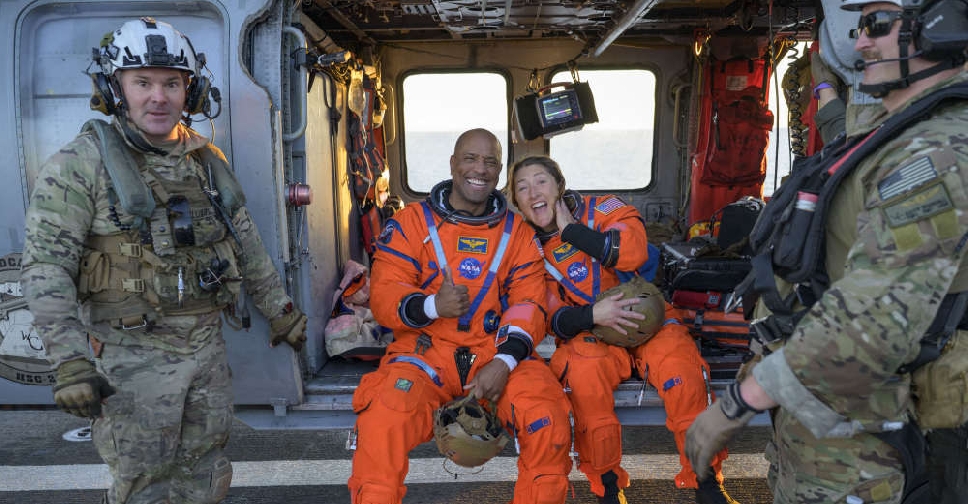 Artemis II astronauts safely back on Earth after trip around moon
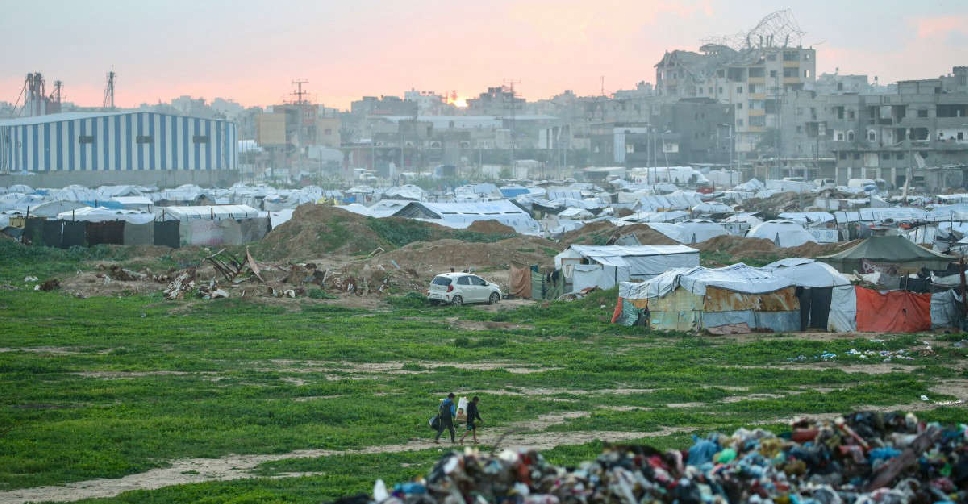 Israeli strikes kill seven in Gaza, health officials say
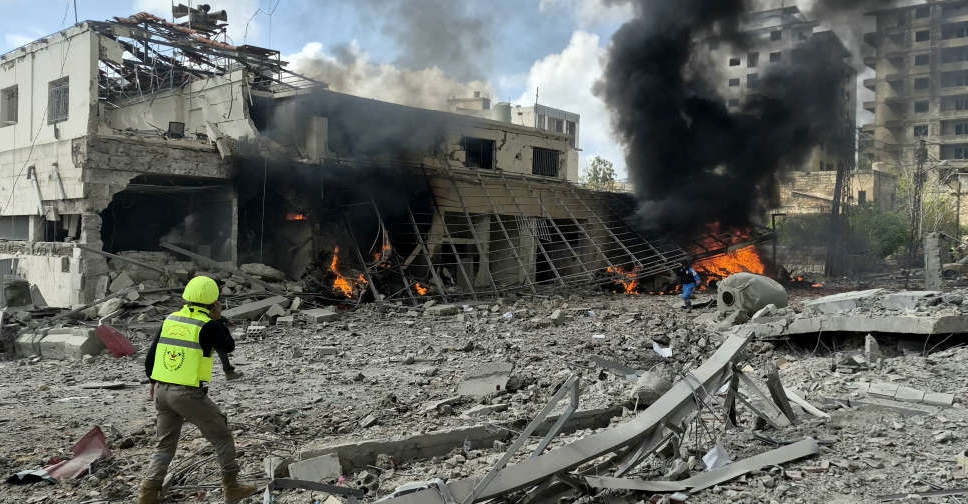 Iran demands Lebanon ceasefire, unfreezing of assets before peace talks
 New Zealand authorities order thousands to evacuate ahead of tropical cyclone
 Man arrested after four die in Channel boat crossing