

A ceasefire between the United States and Iran appeared in jeopardy on Monday after the US said it had seized an Iranian cargo ship that tried to run its blockade and Tehran vowed to retaliate, refusing for now to join new peace talks.
Iranian Foreign Ministry spokesman Esmaeil Baghaei said Washington has shown it was "not serious" about pursuing the diplomatic process and Tehran would not change its clearly stated demands, adding that it did not believe in deadlines or ultimatums when safeguarding national interests.
The US had hoped to start negotiations in Pakistan shortly before the two-week ceasefire expires, with sweeping security preparations under way in Islamabad, but Baghaei said the US was "insisting on some unreasonable and unrealistic positions".
A senior Iranian source told Reuters the continuation of the US blockade on Iranian ports was undermining the prospect of peace talks, and Tehran's "defensive capabilities", including its missile programme, were not open to negotiation.
A Pakistani security source said Pakistan's key mediator, Field Marshal Asim Munir, had told US President Donald Trump the blockade was an obstacle to talks, and that Trump had replied that he would consider the advice.
US MARINES BOARD IRANIAN VESSEL
The US has maintained a blockade of Iranian ports, while Iran has lifted and then reimposed its own blockade on marine traffic passing through the Strait of Hormuz, which typically handles roughly one-fifth of the world's oil and liquefied gas supply.
Oil prices rose more than 6 per cent and stock markets wobbled as traders fretted that the ceasefire would collapse and traffic in and out of the Gulf would remain at a bare minimum.
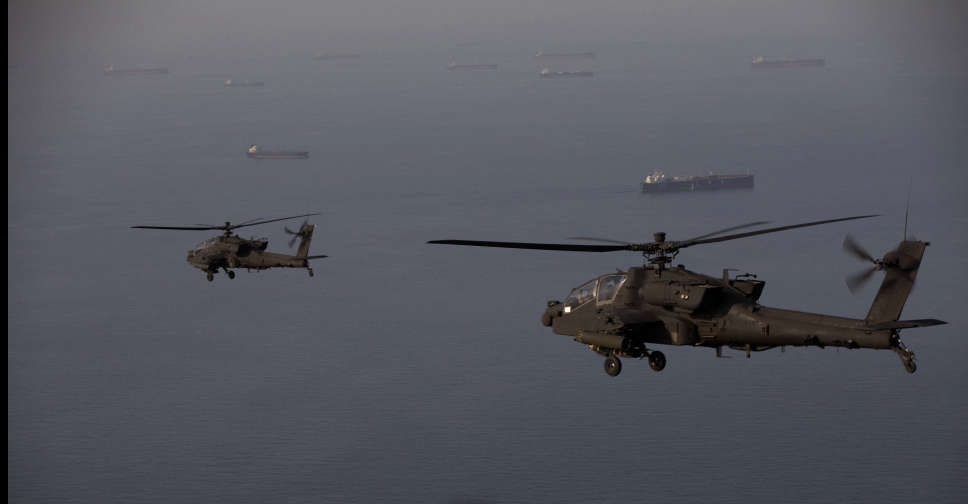
The US military said it had fired on an Iranian-flagged cargo ship headed towards Iran's Bandar Abbas port on Sunday after a six-hour standoff, disabling its engines. US Central Command released video showing Marines descending ropes from helicopters onto the vessel.
Iran's military said the ship had been travelling from China and accused the US of "armed piracy", according to state media. They said they were ready to confront US forces over the "blatant aggression", but were constrained by the presence of crew members’ families on board.
China expressed concern over the "forced interception", and a Chinese foreign ministry spokesperson urged relevant parties to abide by the ceasefire agreement in a responsible manner.
Tehran refused new peace talks for now, citing the ongoing blockade, threatening rhetoric, and Washington's shifting positions and "excessive demands".
"One cannot restrict Iran's oil exports while expecting free security for others," First Vice President Mohammadreza Aref wrote on social media. "The choice is clear: either a free oil market for all, or the risk of significant costs for everyone."
Trump earlier warned that the US would destroy every bridge and power plant in Iran if it rejected his terms, continuing a recent pattern of such threats. Iran said it would retaliate, if attacked.
PREPARING FOR TALKS THAT MIGHT NOT HAPPEN
Trump said his envoys would arrive in Islamabad on Monday evening, one day before the two-week ceasefire ends.
A White House official told Reuters the US delegation would be headed by Vice President JD Vance, who led the US delegation to the first round of talks a week ago, and also include Trump's envoy Steve Witkoff and son-in-law Jared Kushner. But Trump told ABC News and MS Now that Vance would not go.
Pakistan, which has served as the main mediator, was still gearing up for the talks.
Nearly 20,000 police, paramilitary and army personnel have been deployed across the capital Islamabad, a government and a security official said.
Iran's parliament speaker, Mohammad Baqer Qalibaf, who has led Iran's side in the talks, said on Saturday the two sides had made progress but were still far apart on nuclear issues and the Strait.
European allies, repeatedly criticised by Trump for not aiding his war effort, worry that Washington's negotiating team is pushing for a swift, superficial deal that would require months or years of technically complex follow‑on talks.
Now in its eighth week, the war has created the most severe shock to global energy supplies in history, sending oil prices surging because of the de facto closure of the strait.
Thousands of people have been killed by US-Israeli strikes on Iran and in an Israeli invasion of Lebanon conducted in parallel since the war began on February 28, where a truce is also currently in place.

 Indian opposition marches in protest seeking resignation of election chief
 Cornell students stage rally in support of 'Jane Doe'
 Dozens quarantined in Siberia after plague institute lab worker dies
 US, German scientists win Nobel medicine prize for work on light and brain
 Nigeria military aircraft crashes with 32 aboard