
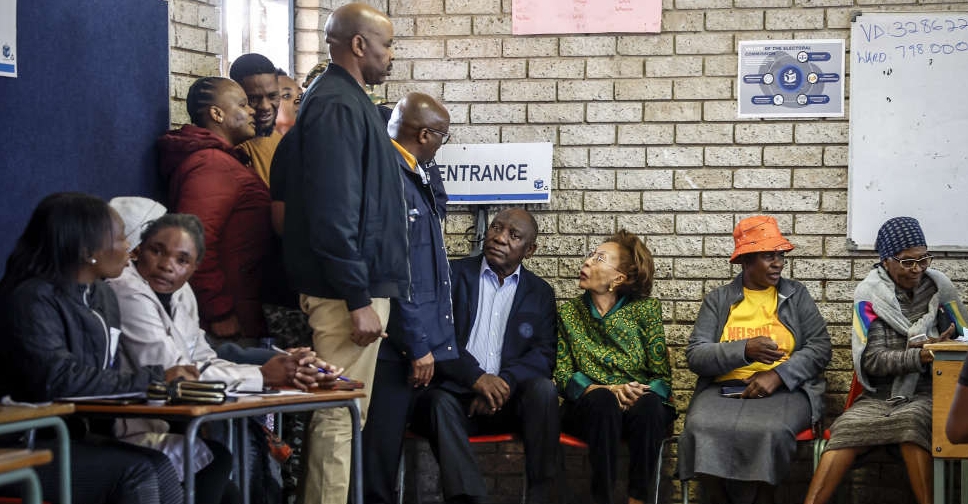
South Africans began voting on Wednesday in the most competitive election since the end of apartheid, with opinion polls suggesting the African National Congress (ANC) will lose its parliamentary majority after 30 years in government.
Polling stations opened around 7:00 a.m. (0500 GMT), with voters queuing at some locations including Hitekani Primary School in the vast township of Soweto near Johannesburg, where President Cyril Ramaphosa was expected to vote later.
Then led by Nelson Mandela, the ANC swept to power in South Africa's first multi-racial election in 1994 and has won a majority in national elections held every five years since then, though its share of the vote has gradually declined.
If it falls short of 50 per cent this time, the ANC will have to make a deal with one or more smaller parties to govern - uncharted and potentially choppy waters for a young democracy that has so far been utterly dominated by a single party.
The ANC is still on course to win the largest share of the vote, meaning that its leader Ramaphosa is likely to remain president, unless he faces an internal challenge if the party's performance is worse than expected.
Voter dissatisfaction over high rates of unemployment and crime, frequent power blackouts and corruption in party ranks lies behind the ANC's gradual fall from grace.
More than 27 million South Africans are registered to vote at more than 23,000 polling stations located in schools, sports centres and even a funeral parlour in Pretoria. Voting will continue until 9:00 p.m. (1900 GMT).

 Trump to wrap up Xi summit with a tour of US archives
 France to send military to protect Saudi Arabia, Macron says
 Gaza facing world's worst economic crisis, says UNCTAD
 At UN, Netanyahu defends Israel as delegates walk out
 Trump welcomes Xi to Washington looking for a trade win