

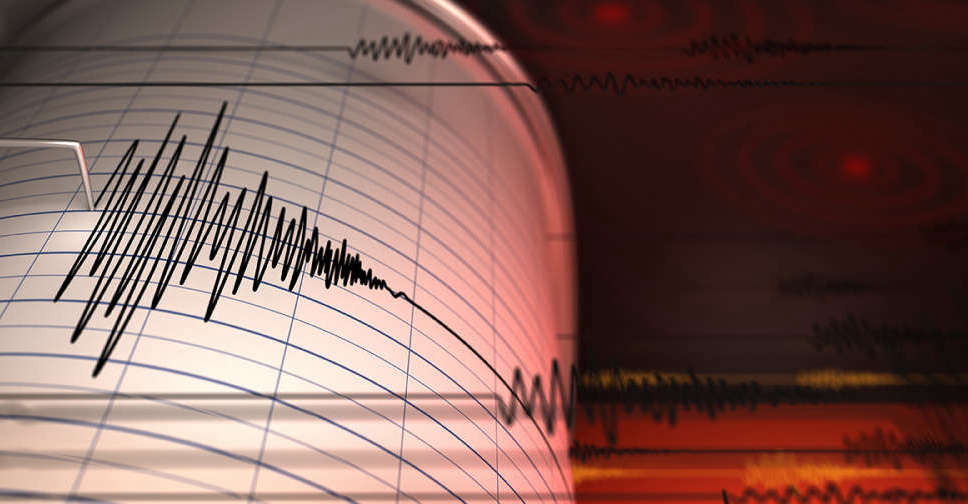
An earthquake of magnitude 6.9 has struck Japan's northeast coast on Thursday, but no tsunami warning was issued, no injuries were immediately reported and no irregularities were found at nuclear facilities, the authorities said.
Japan's government has set up an emergency team to gather information on the quake in the Tohoku region and is ready for disaster relief operations, Chief Cabinet Secretary Minoru Kihara told reporters.
The epicentre of the quake, which was about 50 km deep, was off the coast of Iwate prefecture, and no tsunami damage was expected, except for slight sea level changes, the Japan Meteorological Agency said.
On the Japanese 0-7 intensity scale, the hardest-hit area was Aomori prefecture at 6-plus, a level defined as making it impossible to remain standing or to move without crawling.
Tohoku Electric Power said no irregularities were found at its Onagawa and idled Higashidori nuclear power plants. Nearby nuclear facilities of Tokyo Electric Power and other companies saw no abnormalities, the Nuclear Regulation Authority said.
East Japan Railway said it has halted some trains, including Tohoku Shinkansen high-speed rail services, after the quake. Expressway routes in Aomori were shut for inspections.
Earthquakes are common in Japan, one of the world's most seismically active areas. Japan accounts for about one-fifth of the world's earthquakes of magnitude 6 or greater.
In March 2011, the northeast coast was struck by a magnitude 9 earthquake, the strongest quake on record in Japan, and a massive tsunami. Those events triggered the world's worst nuclear crisis since Chornobyl a quarter of a century earlier.

 Saudi Arabia says 2 airports targeted as fighting with Yemen's Houthis escalates
 Indian opposition marches in protest seeking resignation of election chief
 Cornell students stage rally in support of 'Jane Doe'
 Dozens quarantined in Siberia after plague institute lab worker dies
 US, German scientists win Nobel medicine prize for work on light and brain