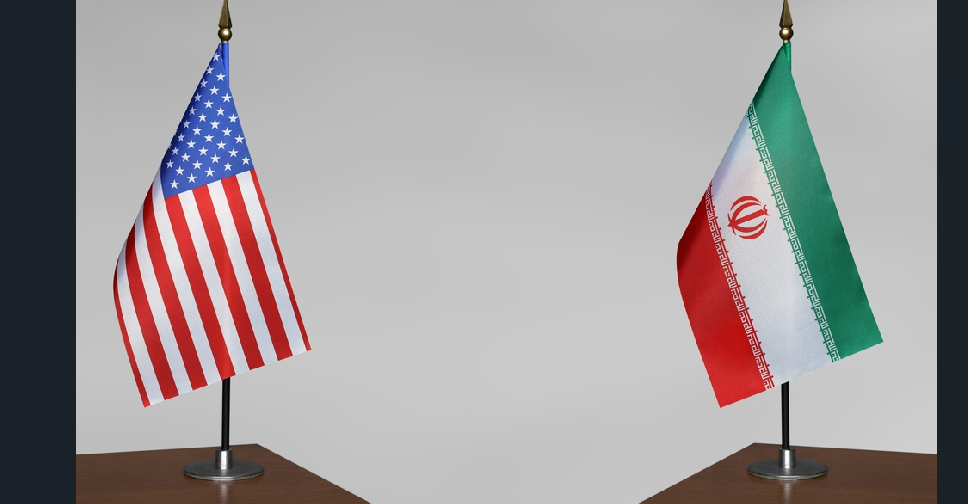
Tehran has submitted its latest proposal for negotiations with the United States, Iranian state media and a Pakistani official said on Friday, a move that could offer hope for breaking a deadlock in efforts to end the Iran war.
The official, involved in Pakistani mediation efforts over the war, said Pakistan had received the proposal late on Thursday and had forwarded it to the US.
Neither the official nor Iranian state news agency IRNA gave details.
Global oil prices, which have risen sharply since Iran started a blockade of the Strait of Hormuz, eased following news of the proposal.
The blockade of the vital sea channel has choked off 20 per cent of the world's oil and gas supplies, and the US Navy is blocking exports of Iranian crude oil. This has pushed up energy prices and increased concerns that there will be an economic downturn.
It was not immediately clear whether the Iranian proposal had been passed on to Washington yet.
A ceasefire has been in place since April 8 but reports that US President Donald Trump was to be briefed on plans for new military strikes to compel Iran to negotiate had pushed global oil prices up to a four-year high at one point on Thursday.
Iran has activated air defences and plans a wide response if attacked, having assessed that there will be a short, intensive US strike, possibly followed by an Israeli attack, two senior Iranian sources told Reuters on condition of anonymity.
'TREACHEROUS AGGRESSION'
Washington has not said what its next steps are. Trump said on Tuesday he was unhappy with the previous proposal from Iran, and Pakistan has not set a date for new talks on ending a war that has killed thousands, mainly in Iran and Lebanon.
After US and Israeli airstrikes on February 28, Iran fired at US bases, infrastructure and US-linked companies in Gulf states, while the Iran-backed Lebanese group Hezbollah launched missiles at Israel, which responded with strikes on Lebanon.
Underlining the concerns of the Gulf states, UAE presidential adviser Anwar Gargash said the "collective international will and provisions of international law" were the primary guarantors of freedom of navigation through the strait.
"And, of course, no unilateral Iranian arrangements can be trusted or relied upon following its treacherous aggression against all its neighbours," Gargash wrote.
Trump faces a formal US deadline on Friday to end the war or make the case to Congress for extending it under the 1973 War Powers Resolution.
The date looks set to pass without altering the course of the war after a senior administration official said that, for the purposes of the resolution, hostilities had terminated due to the April ceasefire between Tehran and Washington.
Financial and energy markets remained on edge because of concerns about the impasse over negotiations and worries that there could be a prolonged closure of the Strait of Hormuz.
Global oil benchmark Brent crude futures for July shed 0.4% to $109.96 a barrel after the IRNA report but were still poised for a 4.5% gain over the week after hitting $126 a barrel on Thursday, the highest level since March 2022.
Iranian Foreign Ministry spokesman Esmaeil Baghaei cautioned on Thursday against expecting quick results from talks.
A senior official of Iran's Revolutionary Guards said any new US attack on Iran, even if limited, would usher in "long and painful strikes" on US regional positions, while Aerospace Force Commander Majid Mousavi was quoted by Iranian media as saying: "We've seen what happened to your regional bases, we will see the same thing happen to your warships."
Trump repeated on Thursday that Iran would not be allowed to have a nuclear weapon, and said the price of gasoline - an important concern for his Republican Party before midterm elections in November - would "drop like a rock" as soon as the war ended.
Iran says its nuclear programme is solely for civilian purposes.
The conflict has aggravated Iran's dire economic problems, risking calamity after the war, but it looks able to survive a standoff in the Gulf for now, despite the US blockade that has cut off its energy exports.
Axios news site reported that one plan to be shared with Trump during a briefing by top US military leaders that was scheduled for Thursday involved using ground forces to take over part of the strait to reopen it to commercial shipping.
Trump is also considering extending the US blockade or declaring a unilateral victory, officials have said.
Washington did not immediately announce any details of its plans.
In a sign that the US was also envisaging a scenario where hostilities cease, a State Department cable due to be delivered orally to partner nations by May 1 invited them to join a new coalition, called the Maritime Freedom Construct, to enable ships to navigate the strait.
France, Britain and others have held talks on contributing to such a coalition but said they would help to open the Strait only when the conflict ends.

 Trump set for whirlwind UN meetings with wars in Iran, Ukraine on agenda
 At least 5 injured in shooting outside Turkey school
 Torrential rains brought by Japan typhoon kill four, NHK says
 Thousands of US flights halted before telecom problem resolved
 UK's Burnham agrees to Saudi request for refuelling support