

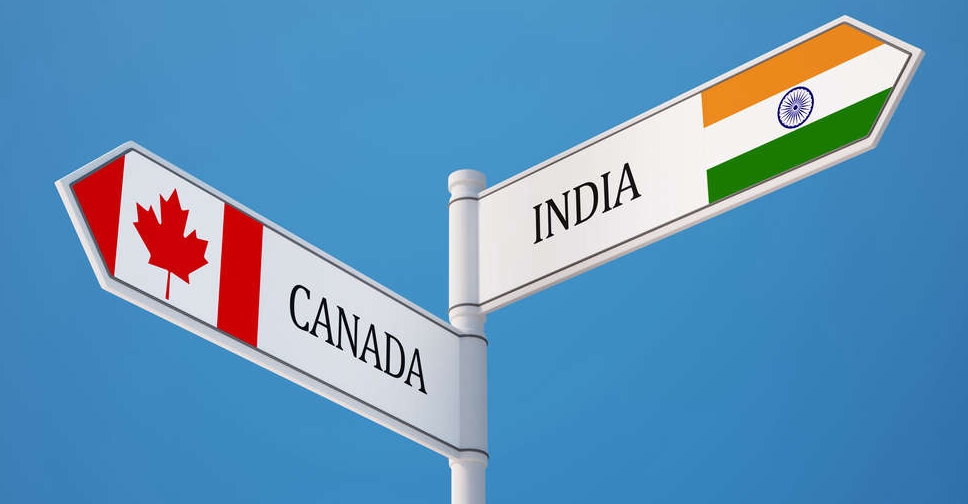
India resumed issuing e-visas for Canadian tourists and business travellers on Wednesday two months after it suspended such services following a row over Ottawa's accusation of possible Indian government involvement in the murder of a Canadian Sikh separatist leader.
Though the move is likely to ease tensions slightly, relations between the two countries are not expected to significantly improve in the near future.
"E-visa services to Canadian nationals have resumed," an Indian government official aware of the decision said on the condition of anonymity, as he was not authorised to speak on the subject.
The official did not say if the decision will lead to a significant thaw in the relationship with Ottawa.
India issues e-visas only for tourism and business for Canadian nationals.
It comes a month after New Delhi had resumed visas under four of the 13 categories that had been suspended in September.
Ties between the countries nosedived after Prime Minister Justin Trudeau told Canada's parliament that his government was "actively pursuing credible allegations" linking Indian government agents to the murder of Hardeep Singh Nijjar, 45, in a Vancouver suburb.
Nijjar was a proponent of a decades-long, but now a fringe demand to carve out an independent Sikh homeland from India named Khalistan.


 Canada announces retaliatory tariffs on $20 billion worth of US goods
 Oman, Iran discuss temporary navigation corridor in Strait of Hormuz
 China, India hold border talks, agree to continue search for boundary settlement
 Slovak police thwart planned arson attack on drone factory
 Record salmonella outbreak in Belgium infects at least 306