

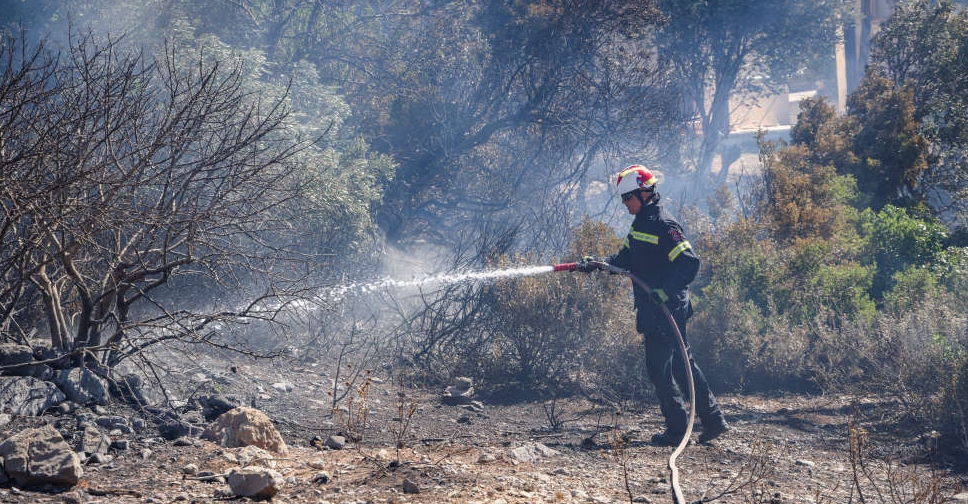
France, Spain and Greece battled major wildfires on Thursday, with Spain bringing one blaze under control but facing new threats as intense heat, dry vegetation and powerful winds kept much of southern Europe on alert.
Spanish Prime Minister Pedro Sanchez downgraded the emergency level for a major fire on the border between Madrid and Castilla y Leon, but warned the danger had not passed as at least 10 other blazes caused concern across the country.
In France, two people were arrested on suspicion of arson as crews contained a vast fire near Bordeaux, while fires in Greece killed three firefighters and forced tourists and residents to flee parts of Crete, some by boat.
"We barely made it... we were running and the fire was behind us, chasing us," said Lia Galata, a Greek seasonal tourism worker who found shelter in an indoor gym and had to be evacuated by boat as a blaze tore through the hills above a resort on Crete late Wednesday.
"I didn't know if I was going to die from the fire or the ash, or from drowning in the sea. It was insane."
EUROPE IS WORLD'S FASTEST WARMING CONTINENT
Emergency crews have faced barely a pause between heatwaves and fire fronts this summer across an increasingly tinder-dry Europe, the world's fastest warming continent.
Resources are being tested from drought-stricken England, where a fire at a caravan site in the eastern county of Suffolk was declared a major incident, to lush forests in France, the mountains of Spain and the picturesque villages of Greece.
"We have difficult days ahead of us,” Greek Prime Minister Kyriakos Mitsotakis said.
EU countries are having an above-average season for wildfires, already overtaking 2025's record-breaking year. Across parts of western and southern Europe, a relatively wet winter fed forests and scrubland before successive heatwaves baked new growth into tinder, leaving abundant fuel for fires.
Thursday's temperatures showed Europe was the continent furthest from its historic norm, according to the Reuters Climate Monitor. The average high was forecast to be 25.3 degrees Celsius, 3.6 C above what was typical from 1961 to 1990.
The toll of extreme weather has extended well beyond the widespread devastation caused by fires. An estimated 9,800 people have died from heat-related causes in Germany so far this year, the country's RKI public health institute said on Thursday, adding to a growing body of evidence that heat is behind thousands of excess deaths recorded this year in Europe.
FRENCH FIRES CONTAINED, ROAD REOPENS
In southwestern France, authorities said the fires near Bordeaux had not spread overnight, with the area burned holding at 42,000 hectares and milder weather forecast.
The French fires have torn through pine forests and forced about 220,000 residents and holidaymakers to evacuate, although some 60,000 have been allowed to return. Thousands of businesses which briefly suspended operations were gradually reopening, while a key motorway would fully reopen on Thursday after days of partial closures, officials said.
Conditions were expected to ease around Bordeaux on Thursday, with the possibility of thunderstorms, greater humidity and temperatures below recent peaks. But an extreme heat warning remained in force in Gironde, the department of which Bordeaux is the main city.
Meteo France warned in its latest bulletin on Wednesday afternoon that the highest danger of wildfires was now centred on southeastern France and the Mediterranean arc.
Wildfires in France have now burned more land than in any year since 2006.
GALE-FORCE WINDS FAN FLAMES IN GREECE
Two firefighters died after becoming trapped in a fire which erupted in central Crete on Wednesday while they were driving between fire fronts. Another died in a separate fire in the Peloponnese region.
Hundreds of residents and tourists were evacuated from the area by sea and by land around the community of Krya Vrysi and surrounding villages as high winds pushed the fire out of control near popular holiday spots. Many spent the night on camp beds erected in an indoor gym.
Intense heat from wildfires is known to create its own microclimate, which can occasionally lead to more extreme weather phenomenons such as strong winds.
"The situation is desperate," said Yiannis Tartarakis, mayor of Agios Vasilios, a municipality that includes several affected villages.
SPAIN REMAINS ON ALERT
Spanish Prime Minister Pedro Sanchez said authorities had downgraded the emergency level in the affected area between Madrid and Castilla y Leon, but added the crisis was not over.
"The emergency continues; we are downgrading to operational level 2, but will remain on alert," he said.
Overnight weather helped firefighters consolidate the fire's perimeter, with no active fronts or further spread reported for several days. Crews continued monitoring and cooling hot spots, while around 1,000 residents remained evacuated from housing developments near the San Juan reservoir west of the capital.
In Castellón province, on Spain's Mediterranean coast, the Vall d'Uixo wildfire remained active, but firefighters were able to strengthen control lines and consolidate the perimeter and residents evacuated from several small towns were allowed to return home.

 Textile factory fire in southern Chinese city of Foshan kills 8
 At least 3 killed in Pakistani airstrike on Afghanistan
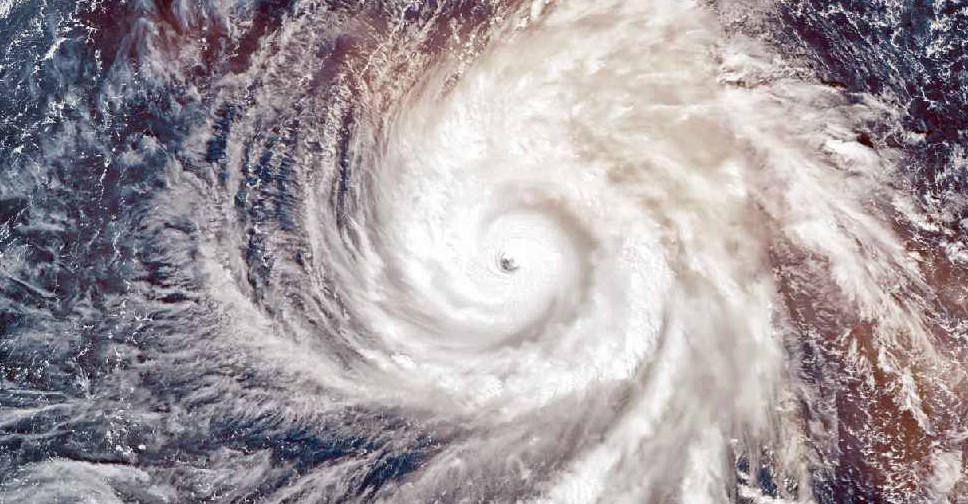 Typhoon approaches eastern Japan, prompts flood and landslide warnings
 Australia to seek UN Security Council seat from 2029
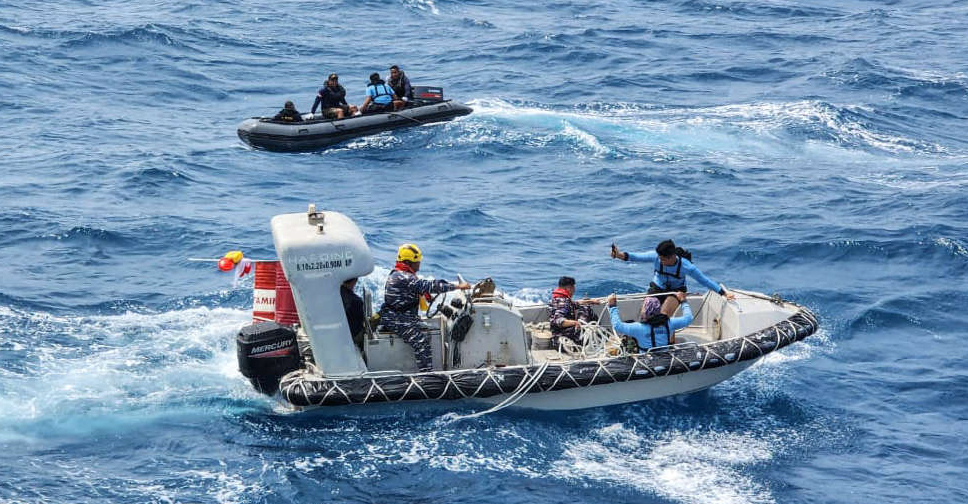 Indonesia continues search for hundreds missing in capsized ship