

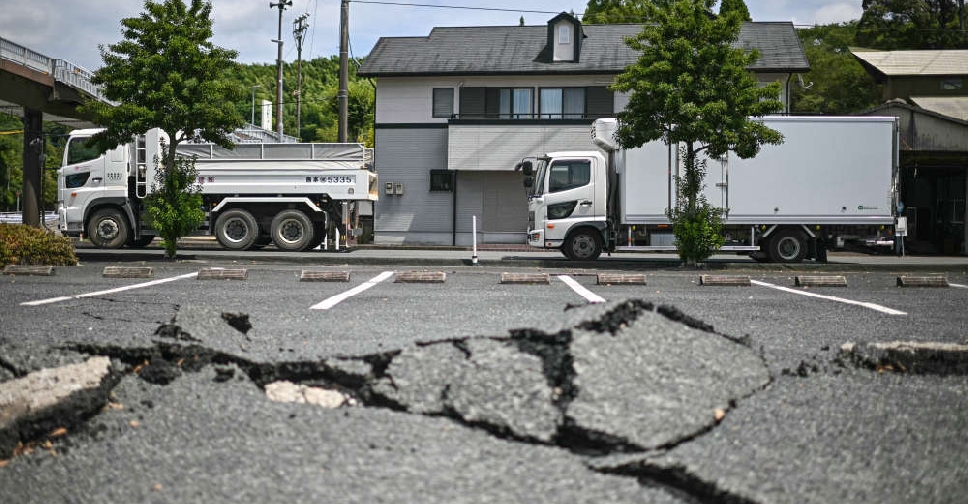
A powerful earthquake that struck southern Japan this week has exposed the vulnerability of the country's manufacturing supply chains, a decade after a devastating quake in the same region triggered widespread industry disruption.
Tuesday's 7.1-magnitude quake claimed at least 34 lives, ruptured roads and cut off utilities to thousands of households.
It also brought factories to a halt in an area critical to Japan's auto industry and known as well as the country's "Silicon Valley" due to its concentration of semiconductor firms.
While economists don't expect disruption on the scale seen after the 2016 quake, problems could persist for the likes of automakers, where parts shortages can snarl production far and wide.
Toyota, for example, has suspended production at three plants in Fukuoka, north of Kumamoto, through to August 5, while even one of its plants in Aichi - more than 600 km (around 400 miles) from the disaster site - will be idled next week.
A Toyota spokesperson said the decision for the suspensions was made in consideration of safety and the situation at distribution companies and suppliers.
Aisin, which makes doors, engines and other parts for Toyota, Daihatsu, and Nissan at a factory near the epicentre, is one such supplier that has been impacted.
The company said in a statement on Thursday that it was preparing to restart production "sequentially on lines where safety and quality can be confirmed". It has yet to determine when full operations can resume.
Reuters saw several trucks enter the Aisin factory on Friday, one carrying portable toilets. The manager of a nearby store said water supplies had been knocked out by the quake but there had been no electricity disruption. Reuters saw no badly damaged buildings in the immediate area around the plant.
TEST OF DISASTER RESILIENCE
The 2016 quake severely damaged the same Aisin plant, snarling supplies of a key door component used by Toyota that forced it to halt production at assembly plants nationwide.
Some second- and third-tier suppliers that make parts for the biggest "Tier 1" suppliers appeared to have been affected by the quake as well, one industry executive told Reuters.
Denso, the world's second-biggest auto parts maker, said one of its suppliers in the area had reported impact from the quake and 13 others were assessing the situation.
Aisin and other Toyota group suppliers are expected to update on the impact when they report first-quarter financial results later on Friday.
Given Japan's proneness to disasters, manufacturers have for decades sought to strengthen the resilience of parts supply. The latest quake will be a test for how robust their efforts have been.
Nissan has suspended some production at its two Kyushu vehicle plants because of delays in parts deliveries, while Mitsubishi Motors said it was halting some production at a plant in Okayama, western Japan.
JAPAN'S 'SILICON VALLEY'
Kumamoto has in recent years also become a global hub for the manufacturing of semiconductors, the tiny components at the heart of products from smartphones and computers to industrial machinery and vehicles.
The world's largest contract chipmaker, Taiwan Semiconductor Manufacturing Co (TSMC), evacuated personnel from its Kumamoto plant immediately after the quake on Tuesday afternoon but a few hours later said it had begun resuming operations.
Others have been slower.
Chipmaker Renesas said it would only be able to resume operations at one of its Kumamoto plants - which had fallen ceiling panels, cracks in walls and some water leaks - in phases from August 5.
Tokyo Electron, a key producer of chip-making equipment, said it was moving to restart production at its factory in the area next week. Sony, which also has a semiconductor plant in Kumamoto, said on Friday that efforts to resume production there were underway.
While the death toll from the earthquake has been far lower than the more than 260 that died in 2016, nearly half of the deaths occurred in commercial facilities.
Nine people were killed at Nippon Paper Industries' paper mill near the epicentre, which suffered major structural damage that saw its smokestack topple over.
A further seven have died at Aeon's shopping mall, the biggest in the prefecture, where a possible gas explosion occurred more than an hour after the initial quake.

 MS NOW, CNN and Politico to sue over White House ban
 Afghanistan says Pakistani airstrikes kill at least three
 New air traffic control failure delays flights at UK airports
 Textile factory fire in southern Chinese city of Foshan kills 8
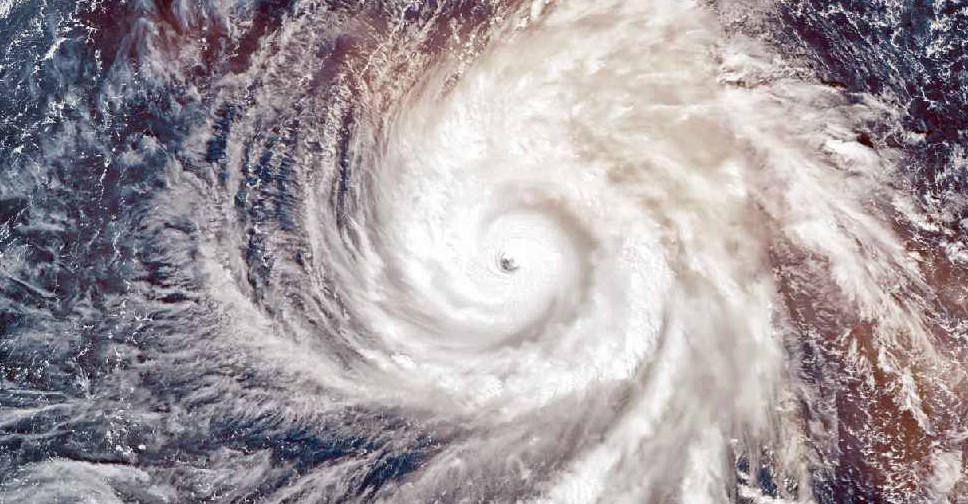 Typhoon approaches eastern Japan, prompts flood and landslide warnings