

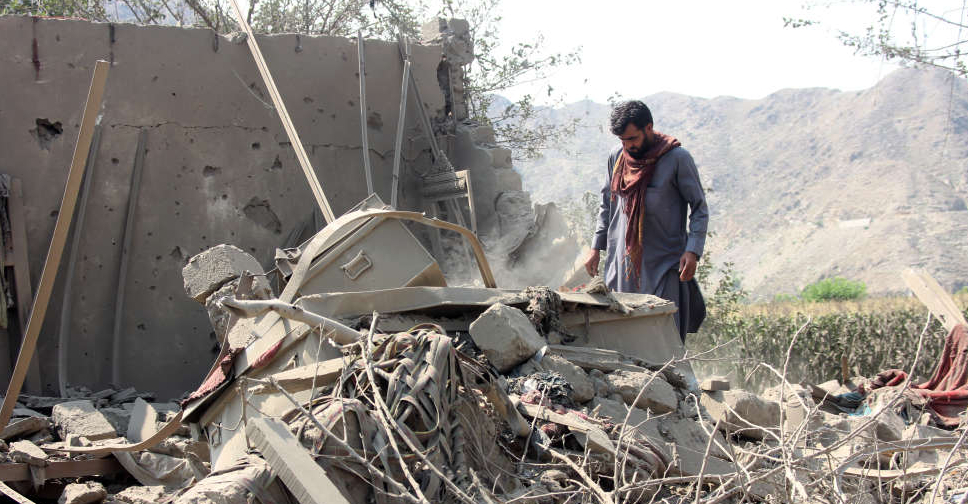
Pakistani airstrikes killed at least three people in Afghanistan on Monday, Afghan officials said, in action that could reignite tensions between the neighbours after nearly three months of relative calm.
The Afghan side "will respond appropriately to this aggression," said Zabihullah Mujahid, chief spokesman of the government.
Afghan officials said the strikes targeted civilians. Pakistan's military did not immediately respond to a request for comment.
Relations between the former allies have been strained for years amid widening insurgencies in Pakistan, with Islamabad accusing Kabul of harbouring militants who stage cross-border attacks from Afghan territory. Tensions escalated this February and hundreds died in airstrikes, drone attacks, and artillery fire in the first half of the year.
Afghanistan's Taliban government denies the accusation that it's harbouring militants and says militancy is Pakistan's internal problem.
The airstrikes on Monday came after a police facility in the northwestern Pakistani district of Kohat was attacked by militants on Friday, killing at least 24 people, including 15 police officials.
Prior militant attacks in Pakistan have often prompted retaliatory strikes from Pakistan.
A separate exchange of fire on Sunday killed six Pakistani soldiers, including two officers, and eight militants in the adjacent district of Hangu near the Afghan border, according to a Pakistani army statement.
At least one house in Kunar province was hit in the strikes on Monday, killing three members of the same family and injuring four others, Taliban deputy spokesperson Hamdullah Fitrat said in a post on X.
"In Barmal District of Paktika (province), two locations...were bombarded, destroying one shop and one unoccupied house, with no casualties reported," he said.
WIDENING INSURGENCIES
Last week's attack in Kohat raised new concerns in Pakistan over widening insurgencies, waged by competing groups that have different support bases and ideologies but share a common enemy in the Pakistani state.
The attack was claimed by a group called Shura Ittehad-ul-Mujahideen, according to a statement sent to Reuters.
While the public focus in Pakistan has been on the Tehreek-e-Taliban Pakistan (TTP), which was behind most of the deadly attacks that have rattled the country, retaliatory Pakistani airstrikes have hit both the TTP and Bahadur's hideouts in Afghanistan since late last year.
DEADLY STRIKES
Afghanistan had launched drones against Pakistan in July, which Islamabad had said its forces had intercepted and shot down.
The worst single incident occurred in March, when more than 400 people were killed in a Pakistani airstrike on Kabul, which the Afghan Taliban said targeted a drug rehabilitation centre.
Islamabad denied the charge, saying it "precisely targeted military installations and terrorist support infrastructure".
Pakistan has a large air force, with 422 combat aircraft and more than 260 helicopters, according to data from the London-based International Institute for Strategic Studies.
Afghanistan has no fighter jets but is known to possess at least six aircraft and 23 helicopters, and drones that have previously been used in fighting with Pakistan.

 MS NOW, CNN and Politico to sue over White House ban
 New air traffic control failure delays flights at UK airports
 Textile factory fire in southern Chinese city of Foshan kills 8
 Typhoon approaches eastern Japan, prompts flood and landslide warnings
 Australia to seek UN Security Council seat from 2029