Private companies that fail to comply with the new policies introduced by the UAE government will face action and increased employee licence fees.
A new classification system is being introduced for private establishments in the UAE, based on their commitment to the country's labour regulations.
The system, which comes into effect on June 1, will see companies split into three distinct categories, depending on the extent to which they comply with policies related to the wage protection system, Emiratisation, promoting cultural and demographic diversity, and protecting workers' rights.
Firms that exceed government-mandated Emiratisation rates and meet certain criteria will be offered discounts on work permit fees and other incentives.
However, those companies that fail to comply with the new regulations could face action.
Speaking to Dubai Eye 103.8's Business Breakfast, Abdul Al Awar, Minister of Human Resources and Emiratisation, explained the charges.
Bids for billionaire Mukesh Ambani's first IPO in 20 years topped $77 billion on Friday, making Jio Platforms India's most subscribed stock offering as it surpassed the 2008 issue of Reliance Power, part of his brother Anil's group.
Sales of Apple's first folding phone, the iPhone Duo, began on Friday, with market watchers betting on whether the device can reinvent the small foldables market in the same way the iPhone did for smartphones.
Microsoft researchers say an AI tool that diagnoses patients step by step, as doctors do, was more than twice as accurate as general physicians at solving complex medical cases, according to a study published on Thursday in Science.
The UAE and Greece have announced 18 agreements and commercial partnerships worth a total of €12.75 billion, strengthening economic and investment cooperation.




 Ambani's Jio becomes most subscribed Indian IPO
 Apple launches into foldable market as iPhone Duo sales begin
 Microsoft develops AI tool that can diagnose 'sequentially' like a doctor
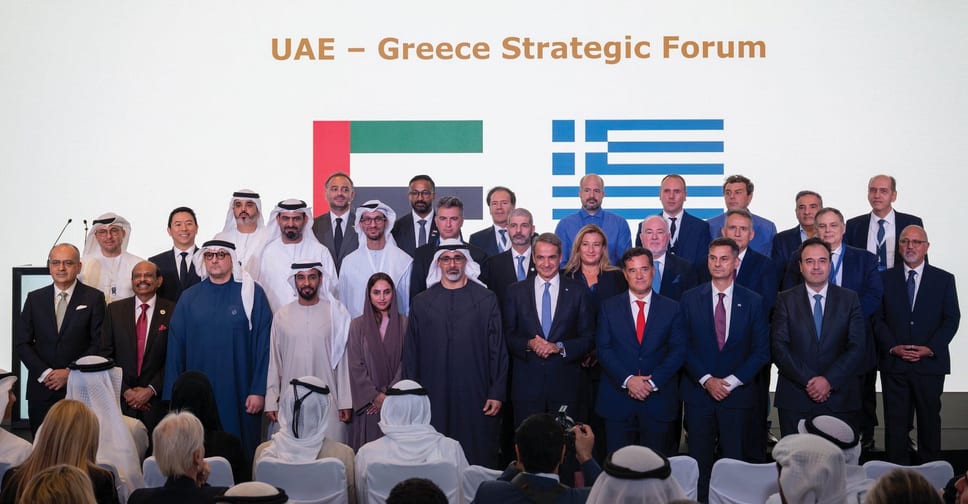 UAE-Greece Strategic Forum opens new horizons for trade, investment