
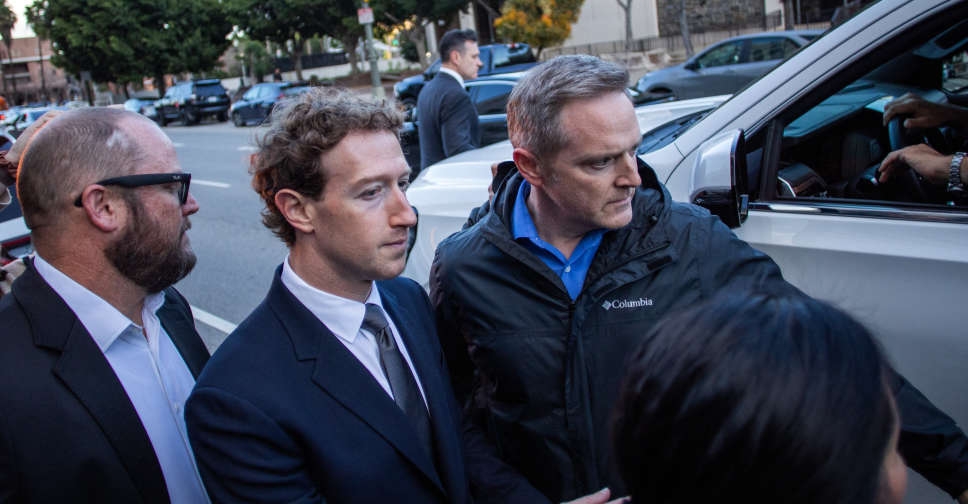
Meta Platforms CEO Mark Zuckerberg has repeatedly said during a landmark trial over youth social media addiction that the Facebook and Instagram operator does not allow kids under 13 on its platforms, despite being confronted with evidence suggesting they were a key demographic.
Mark Lanier, a lawyer for the woman suing Instagram and Google's YouTube for harming her mental health when she was a child, pressed Zuckerberg over his statement to Congress in 2024 that users under 13 are not allowed on the platform. Lanier confronted Zuckerberg with internal Meta documents.
The case involves a California woman who started using Instagram and YouTube as a child. She alleges the companies sought to profit by hooking kids on their services despite knowing social media could harm their mental health. She alleges the apps fueled her depression and is seeking to hold the companies liable.
Meta and Google have denied the allegations and pointed to their work to add features that keep users safe.
"If we want to win big with teens, we must bring them in as tweens," read one internal Instagram presentation from 2018.
"And yet you say that we would never do that," said Lanier.
Zuckerberg replied that Lanier was "mischaracterising what I am saying". The CEO said Meta has "had different conversations over time to try to build different versions of services that kids can safely use." For example, he said Meta discussed creating a version of Instagram for children under 13, but ultimately never did.
Meta faces potential damages at the jury trial in Los Angeles, part of a wave of litigation against social media companies in the US, where cases are beginning to go to trial amid a broader global backlash over the platforms' effect on young users.
Meta's rivals, Snap and TikTok, settled with the plaintiff before the trial kicked off last week.
In one email, Nick Clegg, who was Meta's vice president of global affairs, told Zuckerberg and other top executives, "we have age limits which are unenforced (unenforceable?)" and noted different policies for Instagram versus Facebook make it "difficult to claim we are doing all we can".
Zuckerberg responded by saying that it is hard for app developers to verify user age and that the responsibility should be on the makers of mobile devices. Teens on Instagram are estimated to make up less than 1 per cent of revenue, he testified.
MAXIMIZING SCREENTIME
Zuckerberg also faced questions about his statement to Congress in 2021 that he did not give Instagram teams the goal of maximising time spent on the app.
Lanier showed jurors emails from 2014 and 2015 in which Zuckerberg laid out aims to increase time spent on the app by double-digit percentage points.
Zuckerberg said that while Meta previously had goals related to the amount of time users spent on the app, it has since changed its approach.
"If you are trying to say my testimony was not accurate, I strongly disagree with that," Zuckerberg said.
Jurors were shown a document from 2022 listing "milestones" for Instagram in the coming years, including incrementally increasing the time that users spend on the app daily from 40 minutes in 2023 to 46 minutes in 2026.
The milestones are not "goals," Zuckerberg said, but a "gut check" for senior management about how the company is doing.
In response to questioning by Meta's lawyer, Paul Schmidt, Zuckerberg said that Meta bases employee goals for its products on giving users a good experience.
"If we do that well, people find the services more valuable, and one side effect is they will use the services more," he said.
The appearance was the billionaire Facebook founder's first time testifying in court on Instagram's effect on the mental health of young users.
Matthew Bergman, a lawyer representing other parents who claim social media caused their children's deaths, told reporters outside the courthouse that the parents, several of whom have been attending the trial, hope the cost of the litigation will force change in the industry.
"We know that simply because we have achieved this milestone, justice has been done," he said of Zuckerberg's testimony and the trial.
CASE PART OF BROADER BACKLASH
The lawsuit serves as a test case for similar claims in a larger group of cases against Meta, Alphabet's Google, Snap and TikTok. Families, school districts, and states have filed thousands of lawsuits in the US accusing the companies of fueling a youth mental health crisis.
A verdict against the companies in the Los Angeles case could erode Big Tech's longstanding legal defense against claims of user harm. For many years, US law has shielded internet companies from liability for content decisions. But the ongoing cases focus on the way companies designed and operated the platforms.
Over the years, investigative reporting has unearthed internal Meta documents showing the company was aware of potential mental health harm. Meta researchers found that some teens reported that Instagram regularly made them feel bad about their bodies, and that these people saw significantly more “eating disorder adjacent content” than those who did not, Reuters reported in October.
Adam Mosseri, head of Instagram, testified last week that he was unaware of a recent Meta study showing no link between parental supervision and teens' attentiveness to their own social media use. Teens with difficult life circumstances more often said they used Instagram habitually or unintentionally, according to the document shown at trial.
Meta's lawyer told jurors at the trial that the woman's health records show her issues stem from a troubled childhood, and that social media was a creative outlet for her.
The US litigation is part of a broader reckoning for tech companies. Australia has prohibited access to social media platforms for users under the age 16.
Other countries are considering similar curbs. In the US, Florida has prohibited companies from allowing users under age 14. Tech industry trade groups are challenging the law in court.

 Head of IRGC's intelligence organisation announced as dead
 Six injured after Iranian attack on residential area in Kuwait
 Russian drone attack on Ukraine's Odesa kills three
 US, Iran and mediators make push for 45-day ceasefire
 US snatches airman from Iran as Trump, Israel ratchet up pressure